The Science Behind Spaced Repetition Systems
You study for hours and forget everything in days? The problem isn’t effort — it’s timing. The Spaced Repetition System (SRS) solves this with over a century of cognitive science. Discover how Affex uses this algorithm to beat Anki and Noji.
Table of Contents
- The Forgetting Curve: The Invisible Enemy
- Hacking Memory with Spaced Repetition
- How Affex Flashcards Perfect the Algorithm
- The Results Speak for Themselves
- Affex vs. Anki vs. Noji: A Direct Comparison
- Frequently Asked Questions
- Conclusion
The Forgetting Curve: The Invisible Enemy
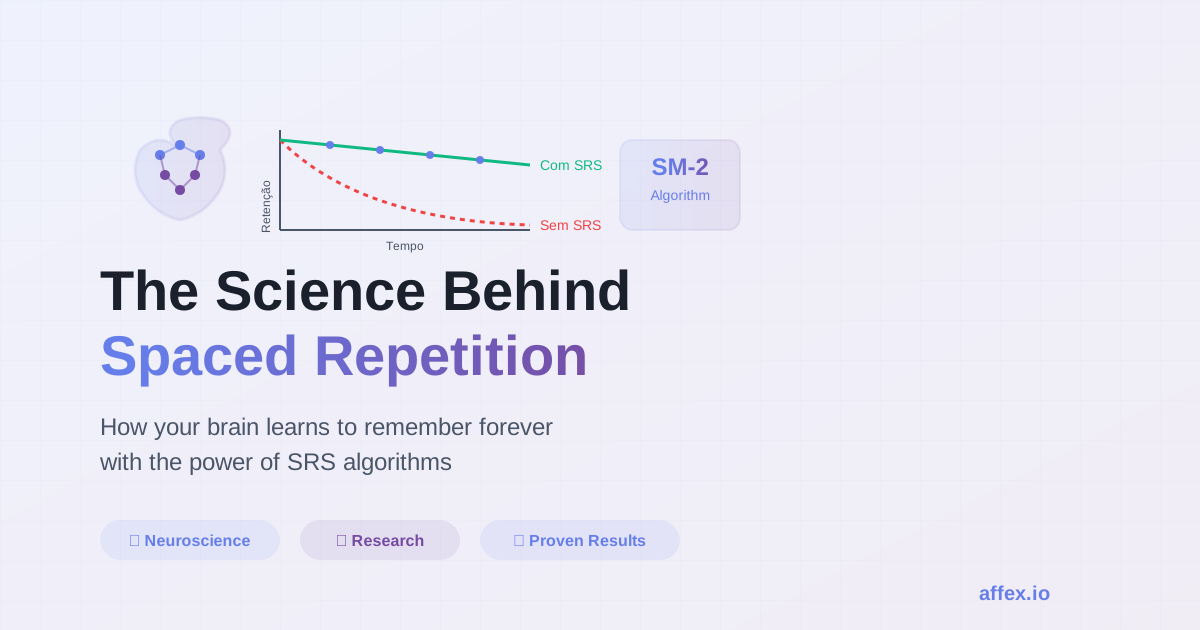
In 1885, Hermann Ebbinghaus discovered that your memory follows an exponential decay curve. Without review, you forget:
- 50% in 1 hour
- 70% in 24 hours
- 75% within a week
This is the Forgetting Curve. It explains why cramming works for the exam but fails afterwards. Your brain discards unreinforced information as “noise.”
Hacking Memory with Spaced Repetition
Spaced repetition combats the Forgetting Curve: you review at the exact moment before forgetting.
Each successful recall sends a signal to your brain: “This is important. Keep it.”
Typical schedule:
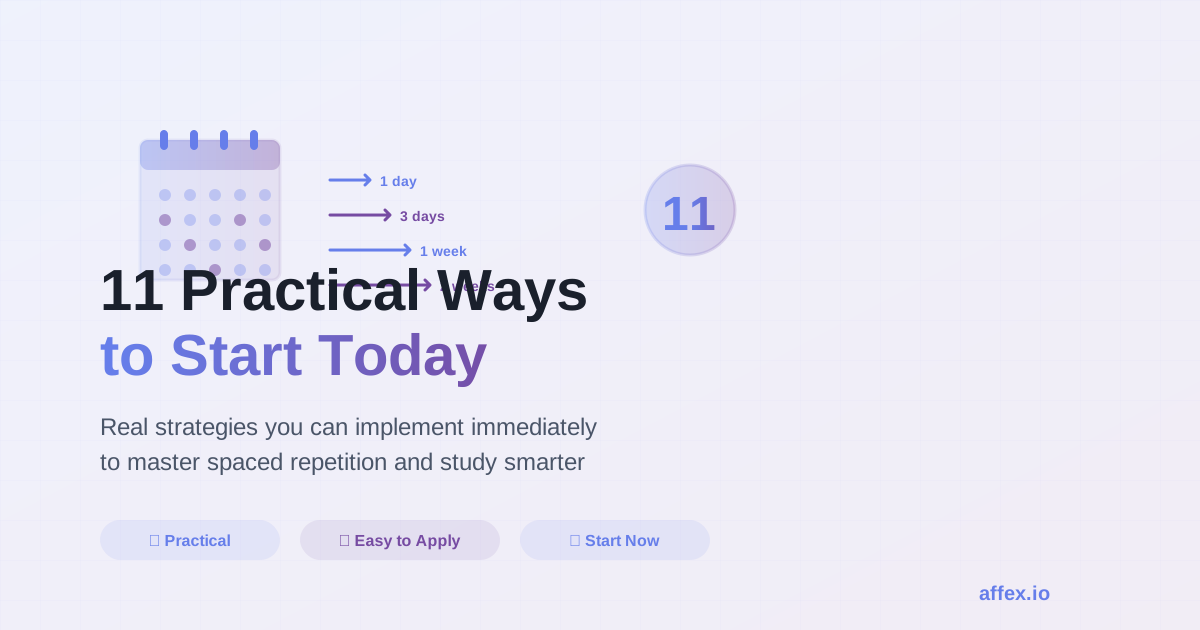
- Review 1: +1 day
- Review 2: +3 days
- Review 3: +7 days
- Review 4: +21 days
With each recall, the interval increases. Information migrates from short-term memory to permanent long-term storage.
How Affex Flashcards Perfect the Spaced Repetition Algorithm
Anki and Noji popularized SRS flashcards, but have problems: Anki is complex (high learning curve), Noji is too basic.
Affex uses the SM-2 algorithm (SRS gold standard) with modern, friction-free interface.
1. Smart Scheduling
Affex calculates, doesn’t guess. Based on your assessment:
- Easy card? Review in 1 month
- Hard card? Review tomorrow
You spend time only on what you need. Result: the same mastery in 30-50% less time.
2. Integrated Active Recall
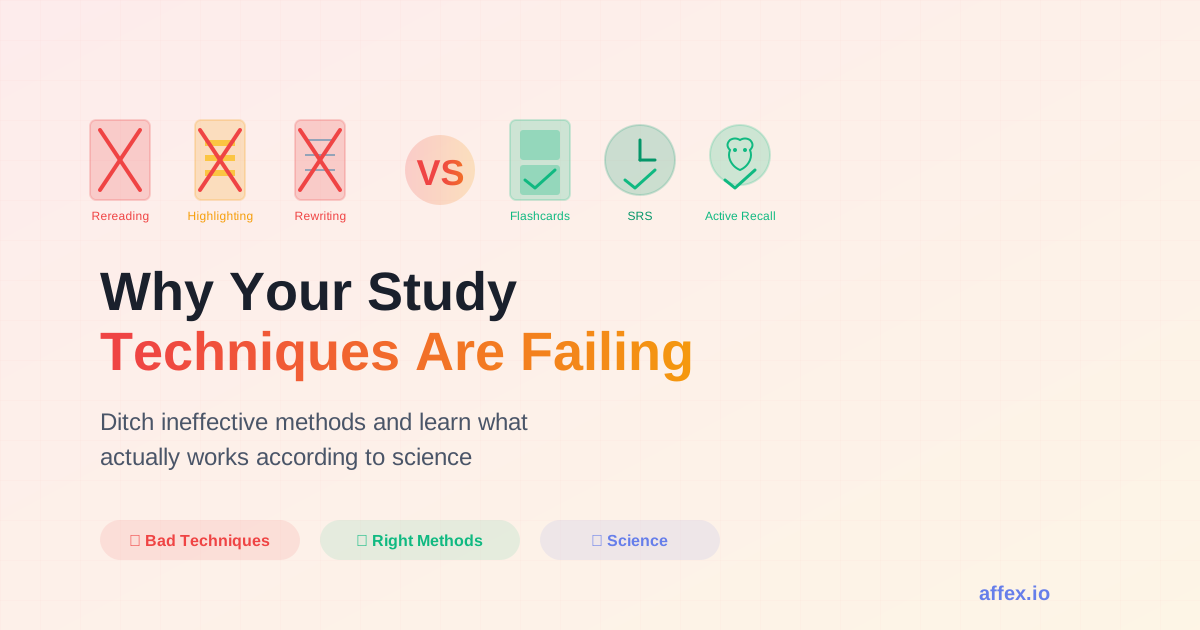
Unlike re-reading or highlighting (passive methods), Affex forces your brain to retrieve the answer before showing it. This mental effort creates permanent neural connections.
3. Mobile-First Without Friction
Study during breaks in your day: bus, line, waiting room. No complexity of “preparing” a session. Consistent daily habit = long-term retention.
The Results Speak for Themselves
Research on spaced repetition proves:
- Significantly higher long-term retention vs. massed study, confirmed across 254 studies (Cepeda et al., 2006 — Psychological Bulletin)
- 30-50% less time for the same mastery
- Permanent knowledge that lasts years
Affex vs. Anki vs. Noji: A Direct Comparison
| Feature | Affex | Anki | Noji |
|---|---|---|---|
| SRS Algorithm | SM-2 (optimized) | SM-2 | Basic |
| Learning Curve | Low | High | Low |
| Mobile-First | ✅ | ⚠️ | ✅ |
| Gamification | ✅ | ❌ | ⚠️ |
| Structured Paths | ✅ | ❌ | ❌ |
| Cloze Deletion | ✅ | ✅ | ❌ |
| Native Anki Import | ✅ | ✅ | ⚠️ |
| Pomodoro Timer | ✅ | ❌ | ❌ |
| True Cross-Platform | ✅ | ✅ | ⚠️ |
| Free Tier | ✅ | ✅ | ✅ |
Frequently Asked Questions
What is the SM-2 algorithm?
Super Memo 2, developed in 1987. Calculates optimal intervals based on your performance on each flashcard. It’s the SRS gold standard used by Affex, Anki, and other apps.
Is Affex better than Anki?
Depends on your profile. Anki is powerful but complex (great for advanced users). Affex balances power + simplicity, ideal for those who want to start quickly without complicated configurations.
How much time per day do I need to study?
15-30 minutes daily is sufficient. Consistency beats volume. SRS ensures you review only what’s necessary.
Does spaced repetition work for any subject?
Yes. Languages, medicine, law, programming, history — any memorization-based content benefits.
Can I use physical flashcards with SRS?
Yes, with the Leitner Method (boxes). But apps automate calculations, notifications, and adjustments, saving time and increasing precision.
Conclusion
Studying the traditional way is renting knowledge. With spaced repetition, you own permanent knowledge.
Whether for medicine, languages, or certifications, Affex transforms studying into predictable scientific system. For more ideas on how to implement this, see our guide on 11 practical ways to use spaced repetition.
What is the SM-2 algorithm?
Super Memo 2, developed in 1987. Calculates optimal intervals based on your performance on each flashcard. It's the SRS gold standard used by Affex, Anki, and other apps.
Is Affex better than Anki?
Depends on your profile. Anki is powerful but complex (great for advanced users). Affex balances power + simplicity, ideal for those who want to start quickly without complicated configurations.
How much time per day do I need to study?
15-30 minutes daily is sufficient. Consistency beats volume. SRS ensures you review only what's necessary.
Does spaced repetition work for any subject?
Yes. Languages, medicine, law, programming, history — any memorization-based content benefits.
Can I use physical flashcards with SRS?
Yes, with the Leitner Method (boxes). But apps automate calculations, notifications, and adjustments, saving time and increasing precision.

About the Author
Breno GonzagaFounder of Affex. Passionate about learning techniques, productivity, and science-backed study methods.
Related posts
Affex vs. Anki: Which is the Best Spaced Repetition App in 2026?
A comprehensive comparison between Anki and Affex. Discover which spaced repetition and flashcard app is the best choice for students and professionals in 2026.
11 Practical Ways to Use Spaced Repetition Today
Discover 11 proven ways to apply the spaced repetition technique in your daily studies. From digital flashcards to apps like Affex, learn to memorize better.
Why Your Study Techniques Are Failing You
Ditch ineffective study methods. Discover why flashcards with spaced repetition (like Affex) beat re-reading, highlighting, and cramming. Better than Anki.
Ready to transform your learning?
Stop procrastinating your reviews. Start building your long-term memory today.